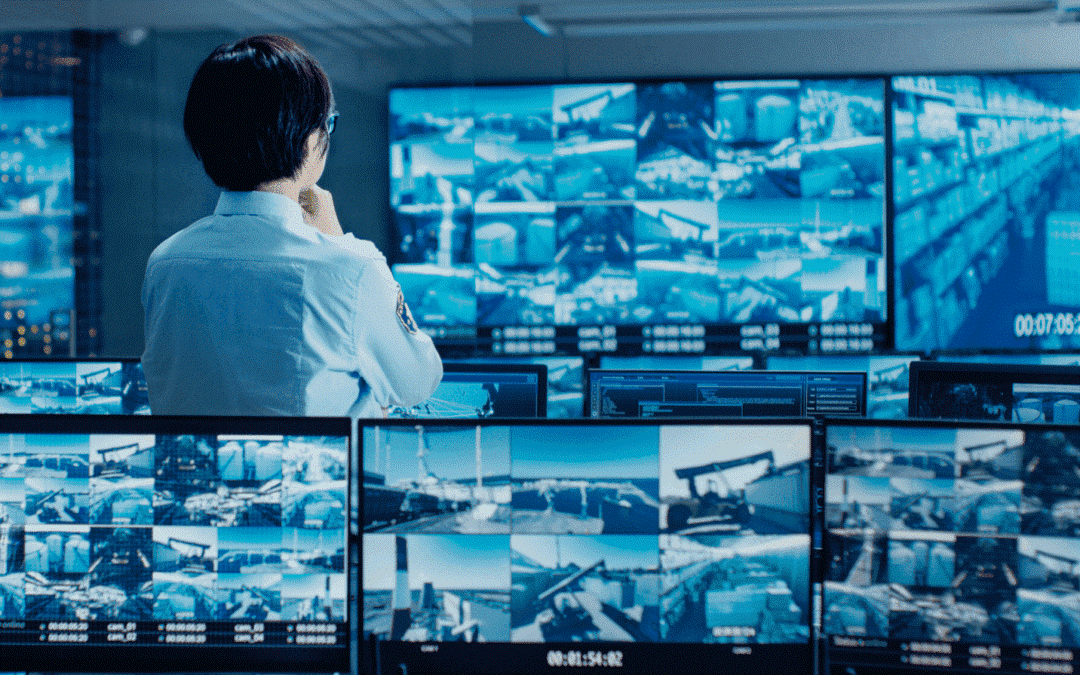
Surveillance is the monitoring of behavior, activities, or information for the purpose of information gathering, influencing, managing or directing. This can include observation from a distance by means of electronic equipment, such as closed-circuit television (CCTV), or interception of electronically transmitted information, such as Internet traffic. It can also include simple technical methods, such as human intelligence gathering and postal interception. Surveillance is used by governments for intelligence gathering, prevention of crime, the protection of a process, person, group or object, or the investigation of crime. It is also used by criminal organizations to plan and commit crimes, and by businesses to gather intelligence on their competitors, suppliers or customers. Religious organizations charged with detecting heresy and heterodoxy may also carry out surveillance.
Crime and Crime Prevention Techniques Approaches to Physical Security
- Security surveillance system used to prevent crime in private and public locations.
- Crime Prevention Through Environmental Design (CPTED) principles and concepts.
- Defensible Space principles and concepts.
- Situational Crime Prevention principles and concepts.
- Lighting that meets standards and design by increased visibility.
- Biometrics and access control to specific areas.
- CPTED design.
- CPTED security landscape principles.
- Signage or visible security signs.
- Padlocks, door locks, and door viewers (peep-holes).
- Security surveillance systems (CCTV).
- Intrusion alarms and alarm signage.
- Security surveillance systems (closed-circuit televisions).
- Security awareness programs.
- Planters and thorny bushes.
- Bollards or barricades closing down streets.
- Vehicle in driveway VMS for accountability.